

Unlock Your Dream Spaces: Crafting Powerful AI Prompts for Interior Design
The ultimate guide to using AI for interior design concepts, visuals, and spatial inspiration
TIPS & GUIDESDESIGN INSPIRATIONARCHITECTURE & PLANNINGINTERIOR DESIGNLANDSCAPE & OUTDOOR SPACESRENOVATION & PROJECT MANAGEMENT

Unlock Your Dream Spaces: Crafting Powerful AI Prompts for Interior Design
The ultimate guide to using AI for interior design concepts, visuals, and spatial inspiration
4
Transform your vision into stunning reality with expertly written AI interior design prompts
Artificial intelligence is rapidly transforming the way interior designers, architects, and homeowners visualise spaces before they are built. But the real secret behind impressive AI-generated interiors isn’t the tool itself — it’s how you communicate with it.
This in-depth guide shows you how to write powerful AI prompts for interior design, helping you generate photorealistic renders, mood-driven concepts, and practical layouts that feel intentional, refined, and professional.
Whether you’re a designer, developer, or homeowner exploring ideas, mastering prompt engineering allows AI to become a creative partner, not just a generator.
Why AI Prompts Matter in Interior Design
AI design tools don’t “design” on their own — they interpret language. Vague prompts lead to generic outputs. Precise prompts lead to spaces with character, coherence, and realism.
Well-crafted prompts help you:
Control style, mood, and atmosphere
Achieve realistic materials and lighting
Generate consistent design language
Speed up concept development
Communicate ideas clearly with clients
Highlights for Crafting Exceptional Interior Design Prompts
Key Principles That Drive Better Results
Specificity wins
The more clearly you describe style, materials, lighting, and function, the closer the result will match your intent.Think like a designer, write like a director
Describe what the space feels like, not just what’s inside it.Iterate, don’t restart
Refinement prompts consistently outperform one-off prompts.Match the prompt to the AI tool
Image-based AI loves visual detail. Text-based AI excels at planning and rationale.
The Art and Science of Prompt Engineering for Interior Design
Effective prompting sits between design thinking and technical clarity. A strong prompt breaks a space into interpretable layers.
Core Components of a High-Performing Prompt
1. Room Type & Function
Always define how the space is used.
“A master bedroom designed for rest and privacy”
performs better than
“bedroom interior”
2. Design Style
Name the style clearly. You can also blend styles.
Examples:
Modern minimalist
Japandi
Contemporary luxury
Industrial chic
Mediterranean modern
3. Mood & Atmosphere
Mood influences lighting, contrast, and texture.
Keywords that work well:
Calm, serene, cozy
Warm, intimate, elegant
Airy, bright, refined
Cinematic, dramatic
4. Color Palette & Materials
Be intentional.
Examples:
Warm neutrals with oak wood and linen
Earth tones with stone, clay, and textured plaster
Monochrome palette with matte black accents
5. Furniture & Key Elements
Mention hero pieces.
Examples:
Sculptural sofa
Floating bedside tables
Slatted wood feature wall
Statement pendant lighting
6. Lighting & Natural Elements
Lighting defines realism.
Examples:
Soft indirect LED lighting
Warm ambient lighting at sunset
Diffused daylight from large windows
7. Technical & Visual Quality
Especially important for image generation.
Keywords:
Photorealistic
Ultra-realistic
Cinematic lighting
4K detail
Architectural photography style
Illustrative AI Prompts Across Interior Design Styles
4
Modern & Minimalist Prompts
Modern Minimalist Living Room
Photorealistic modern minimalist living room with neutral tones, warm beige walls, soft linen sofa, oak wood flooring, black metal accents, floor-to-ceiling windows, natural daylight, subtle indoor plants, clean lines, calm and elegant atmosphere, cinematic lighting, high-resolution interior render
Contemporary Kitchen
Contemporary kitchen design with matte black cabinetry, marble worktops, brass details, large island, integrated appliances, warm under-cabinet lighting, minimal clutter, modern architectural photography style, ultra-realistic
Cozy & Warm Spaces
Master Bedroom Retreat
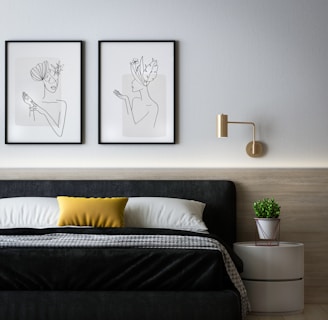
Luxury master bedroom with king-size bed, upholstered headboard, warm wood panels, soft linen bedding in neutral tones, indirect LED lighting, textured rug, calm and intimate mood, evening ambiance, photorealistic interior design render
Rustic Modern Living Room
Rustic modern living room with exposed wood beams, stone fireplace, soft fabric sofas, warm earthy colors, layered lighting, cozy mountain-home atmosphere, ultra-realistic interior visualization
Biophilic & Lifestyle-Driven Prompts
Biophilic Home Office
Biophilic home office with large windows, indoor plants, natural wood desk, neutral palette, soft daylight, minimal clutter, calm and focused environment, sustainable design aesthetic, realistic interior render
Spa-Inspired Bathroom
Minimalist spa bathroom with freestanding tub, natural stone walls, matte black fixtures, soft warm lighting, greenery accents, hotel-like luxury atmosphere, cinematic interior photography style
Advanced Prompting Techniques (Pro Level)
Iterative Refinement (Highly Effective)
Instead of rewriting prompts, layer instructions:
Refine the previous design by softening the lighting, adding warmer tones, increasing texture on fabrics, and reducing contrast for a more relaxed, intimate mood.
Style Anchoring (Designer-Level Control)
Inspired by high-end European interior design, editorial photography style, subtle luxury, understated elegance.
Time-of-Day Control
Golden hour sunlight entering through large windows, soft shadows, warm highlights, cinematic evening atmosphere.
How Designers Use AI Prompts in Real Projects
AI prompts are increasingly used for:
Early concept development
Client presentations
Mood boards & visual alignment
Testing styles before committing
Speeding up design exploration
AI doesn’t replace design expertise — it amplifies it.
Frequently Asked Questions (SEO-Optimised)
What is the best AI prompt for interior design?
The best prompt clearly defines room type, style, mood, materials, lighting, and realism level, using descriptive but focused language.
Can AI replace interior designers?
No. AI supports ideation and visualization, but professional designers provide spatial planning, technical knowledge, and execution expertise.
Which AI tool is best for interior design?
Image-based tools are best for visuals, while text-based AI excels at layouts, concepts, and material logic. Combining both gives the strongest results.
Conclusion: AI as a Creative Partner in Interior Design
When used intentionally, AI becomes a powerful extension of your creative process. The quality of your results depends directly on the clarity of your prompts.
By thinking like a designer and communicating like a storyteller, you can transform AI from a novelty into a serious design asset — one that accelerates ideas, sharpens vision, and elevates presentations.
Want Professional Interior Design Beyond AI?
AI is a starting point — real spaces require experience, precision, and execution.
Explore professional interior design, architectural design, and fit-out services at
www.nournagy.co.uk